
 Chinese
  English
 Espa?ol
 Русский
 Current position:Home > News & Events > News
Solving Common Issues in PVC Cable Compounds: From Formulation to Process
Solving Common Issues in PVC Cable Compounds: From Formulation to Process
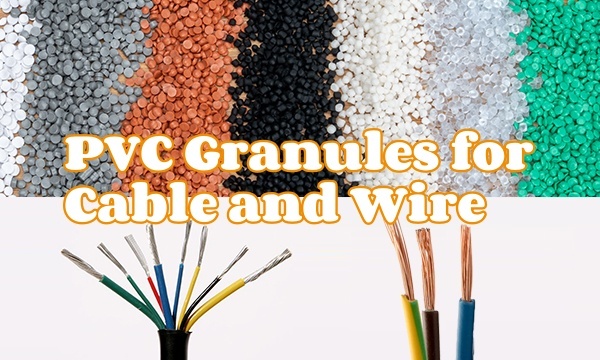
PVC cable compounds, a traditional cable material valued for low cost and simple processing, often encounter issues like air bubbles, rough surfaces, poor insulation, moisture absorption, brittleness, and plasticizer bleeding during production and use. This article outlines key problems and solutions based on industry practices:
1. Air Bubble Problem
Causes:
Excessive moisture in raw materials: Hygroscopic PVC resin/fillers retain moisture due to inadequate drying or poor storage.
Poor formulation stability: High-temperature degradation produces gas or long residence time causes decomposition.
Solutions:
Raw material control: Strengthen drying of PVC resin/fillers to ensure moisture content.
Process optimization: Adjust stabilizer ratio; reduce high-temperature residence time; set extruder vacuum pressure at -0.08~-0.1MPa to discharge volatile gases.
2. Rough Surface
Causes:
Agglomeration: Powder lumps, "fish eyes" in PVC resin, or unplasticized particles from unabsorbed plasticizers.
Pitting: Small molecules precipitate after vacuuming, or insufficient external lubrication causes melt adhesion.
Solutions:
Dispersion improvement: Use high-mesh filters, grind powders; treat filler surfaces with coupling agents to reduce lumps.
Lubrication adjustment: Choose high-melting lubricants; balance external and internal lubricant ratio to prevent poor plasticization.
Process control: Increase kneading temperature/time for full plasticizer absorption; discharge 50-100 meters of material after shutdown to remove cold residue.
3. Poor Insulation
Causes:
Impurities: Metal particles or undispersed coarse powders.
Colorants: Heavy metal-containing pigments increase conductivity.
Solutions:
Raw material screening: Use high-purity resin; grind powdery additives to ≤5μm fineness.
Pigment selection: Replace heavy metal salts with inorganic pigments with good insulation.
4. Moisture Absorption
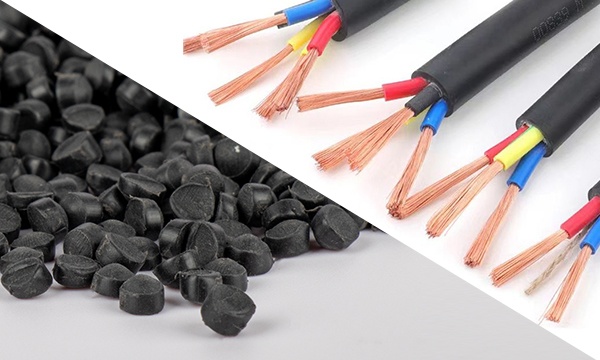
Causes: Hygroscopic low-grade plasticizers or poor packaging sealing.
Solutions:
Packaging upgrade: Seal at <40℃ with moisture-proof materials.
Formulation adjustment: Reduce hygroscopic plasticizers; use hydrolysis-resistant types.
5. Brittleness Issue
Causes:
Wrong resin type: High-grade PVC (short molecular chains) lacks flexibility.
Excessive fillers: Light calcium/clay >30% causes strength drop.
Solutions:
Formulation change: Use low-grade PVC, increase plasticizer ratio; limit fillers to ≤20%.
Process optimization: Raise extrusion temperature for full plasticization; add polymer plasticizers for toughness.
6. "Oil Leakage" Phenomenon
Causes: Poor plasticizer-PVC compatibility or high processing temperature causing small molecule migration.
Solutions:
Plasticizer selection: Use DOP/DIDP as main plasticizers; limit co-plasticizers to ≤20%; match solubility parameters for compatibility.
Process control: Keep kneading temperature ≤120℃ to avoid volatilization; use concentrated sulfuric acid weighting method to monitor epoxy plasticizer content.
The resolution of PVC cable compound issues requires comprehensive optimization from three aspects: formulation, process, and raw materials:
Formulation Design: Balance the lubrication system and select plasticizers and stabilizers with good compatibility.
Process Control: Strictly dry raw materials and optimize kneading and extrusion parameters.
Raw Material Management: Screen high-purity resins and fillers to avoid impurity contamination.
Through targeted adjustments, the surface quality, insulation properties, and durability of cable compounds can be significantly improved, while reducing production costs.
If you have any related questions, you can contact Small Boss. Our scientific research and technical staff are always ready to answer your questions and solve your doubts.